
Behind every breathtaking wildlife image lies a silent pact between the creator and the natural world. While the aesthetic result is often celebrated, the true hallmark of a great photographer is the responsibility exercised behind the lens. The “Nature Photographers’ Code of Practice,” produced by the RPS Nature Group, helps us navigate this balance. It centers on one “hard and fast rule”: “The welfare of the subject is more important than the photograph.”
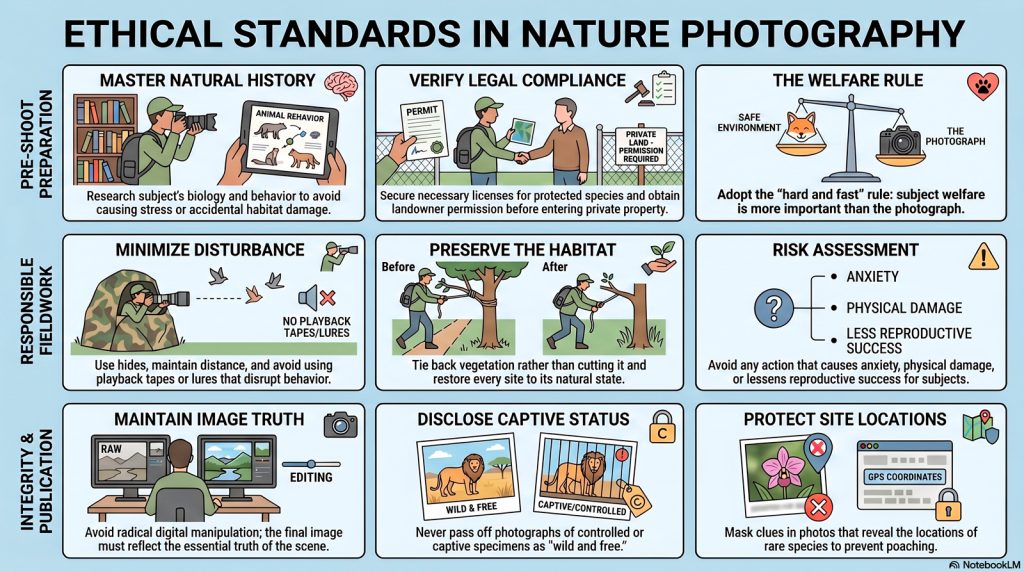
Think of this code as a guide to being a good guest in nature. It may be downloaded at A4 size from here.
Top 5 Most Impactful & Surprising Takeaways
- Know the Law: Under the Wildlife and Countryside Act 1981, causing stress to a bird near its nest is a crime. This is especially true for rare “Schedule 1” birds. In Scotland, it is illegal to harass Schedule 1A birds like the White-tailed Eagle or birds that “lek,” such as the Capercaillie.
- The “Two-In, One-Out” Hide Trick: Birds aren’t great at counting! To keep them acting naturally, two people should walk into a hide, and then one leaves. This tricks the bird into thinking it’s safe. Expert tip: Start setting up your hide at least a week in advance so the bird gets used to it slowly.
- The Science of Fungi: Did you know you usually can’t identify a mushroom from a photo alone? To help science, you may need to collect a few specimens of different ages using a knife. Just be careful—four species, like the Bearded Tooth (Hericium erinaceum), are legally protected from collection under Schedule 8.
- Protect Your Secret Spots: If you find a rare plant or animal, be careful with wide-angle shots that might lead to the site being trampled.
- The “Essential Truth”: We all love a bit of editing, but the Code says a nature photo should show what you actually saw. You can clean up a few distracting spots, but adding or moving things digitally is a big no-no if you want to stay ethical.
Expert Tips & Actionable Advice
- Garden with Care: If you need to move a branch for a clear shot, tie it back instead of clipping it. This keeps the nest hidden from predators and protects the subjects from the sun or rain.
- Check for SSSIs: Before you head out, see if you’re on a Site of Special Scientific Interest. Damaging these spots is a serious legal violation that can lead to heavy fines.
- Let Them Sleep: If you find a sleeping animal in winter, leave it be. Animals like Dormice or Otters (protected under Schedule 5) can lose their safe homes forever if they are woken up.
As photographers, we are more than observers; we are stewards of the wild.
By following these rules, we ensure our hobby doesn’t hurt the planet. Next time you’re about to press the shutter, ask yourself: Does this shot help the species, or am I putting my portfolio first?