
The United States currently has 63 National Parks. Of these, 51 are located within the continental USA (the “Lower 48”). Although they are very popular with the general population during vacation times, most are well worth a trip ‘off-season’for the photographer.
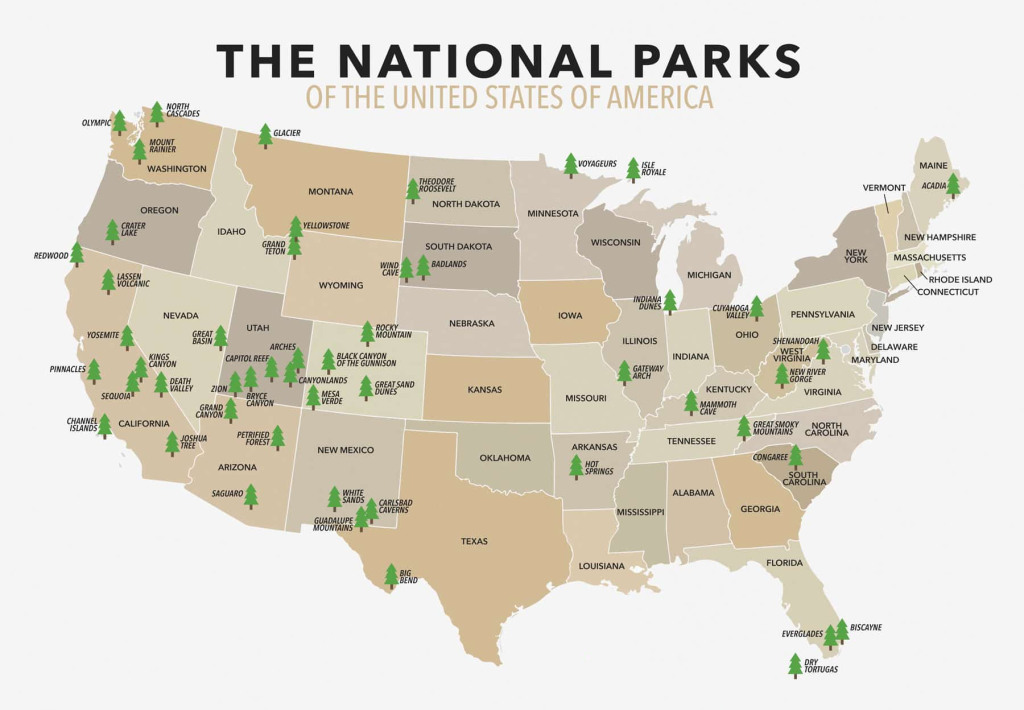
Here are the continental National Parks grouped by state, with a brief explanation of their primary attraction.
Arizona
- Grand Canyon: A massive, iconic gorge carved by the Colorado River with immense scale and colorful rock layers.
- Petrified Forest: Colorful badlands and a high concentration of brilliant, fossilized logs from the Late Triassic.
- Saguaro: Giant saguaro cacti, the symbol of the American West, dotting a stunning Sonoran Desert landscape.
Arkansas
- Hot Springs: Historic “Bathhouse Row” and natural thermal springs located within an urban forest setting.
California
- Channel Islands: Five remote islands preserving unique wildlife, sea caves, and a rugged Pacific coastline.
- Death Valley: The hottest, lowest, and driest place in North America, featuring salt flats and towering sand dunes.
- Joshua Tree: A surreal desert landscape where the Mojave and Colorado ecosystems meet, famous for its twisted trees.
- Kings Canyon: Home to the deepest canyon in the U.S. and massive groves of ancient Giant Sequoia trees.
- Lassen Volcanic: All four types of volcanoes found in the world, plus bubbling mud pots and sulfur vents.
- Pinnacles: Massive monoliths and spire-like rock formations formed by an ancient volcano, home to California condors.
- Redwood: The world’s tallest trees growing along a misty, rugged coastline in Northern California.
- Sequoia: Home to the General Sherman tree, the world’s largest living thing by volume, and high Sierra peaks.
- Yosemite: Famous for its massive granite cliffs like El Capitan, towering waterfalls, and ancient Giant Sequoia groves.
Colorado
- Black Canyon of the Gunnison: Some of the steepest, narrowest, and darkest canyon walls in North America.
- Great Sand Dunes: The tallest sand dunes in North America, nestled against the snow-capped Sangre de Cristo Mountains.
- Mesa Verde: Exceptionally preserved Ancestral Puebloan cliff dwellings and thousands of archaeological sites.
- Rocky Mountain: High-altitude tundra, alpine lakes, and dramatic mountain peaks accessible via the famous Trail Ridge Road.
Florida
- Biscayne: A mostly underwater park protecting coral reefs, mangrove forests, and the northernmost Florida Keys.
- Dry Tortugas: A remote island park featuring historic Fort Jefferson and some of the clearest water in Florida.
- Everglades: The largest subtropical wilderness in the U.S., a “river of grass” home to alligators and manatees.
Indiana
- Indiana Dunes: Rugged sand dunes, wetlands, and prairies along 15 miles of the southern Lake Michigan shore.
Kentucky
- Mammoth Cave: The world’s longest known cave system, featuring over 400 miles of explored limestone passages.
Maine
- Acadia: Dramatic granite peaks, ocean shorelines, and the highest point on the U.S. Atlantic coast.
Michigan
- Isle Royale: A remote, rugged island in Lake Superior accessible only by boat or seaplane, known for wolves and moose.
Minnesota
- Voyageurs: A water-based park of interconnected lakes and forests along the Canadian border, ideal for boating.
Missouri
- Gateway Arch: The iconic 630-foot stainless steel monument symbolizing America’s westward expansion.
Montana
- Glacier: Known as the “Crown of the Continent,” featuring glacier-carved peaks and the scenic Going-to-the-Sun Road.
Nevada
- Great Basin: Home to ancient Bristlecone pines, Nevada’s only glacier, and the marble Lehman Caves.
New Mexico
- Carlsbad Caverns: A massive underground limestone chamber (the Big Room) and thousands of migrating bats.
- White Sands: The world’s largest gypsum dunefield, creating a landscape of brilliant, shifting white sand.
North Carolina & Tennessee
- Great Smoky Mountains: The most visited park, famous for its “smoky” mist, diverse wildlife, and Appalachian culture.
North Dakota
- Theodore Roosevelt: Three sections of colorful badlands where the Great Plains meet the Little Missouri River.
Ohio
- Cuyahoga Valley: A winding river valley between Cleveland and Akron featuring waterfalls, forests, and historic canal sites.
Oregon
- Crater Lake: A deep, incredibly blue lake formed inside a collapsed volcano (caldera) nearly 2,000 feet deep.
South Carolina
- Congaree: The largest intact expanse of old-growth bottomland hardwood forest remaining in the southeastern U.S.
South Dakota
- Badlands: Striking geologic deposits containing one of the world’s richest fossil beds and mixed-grass prairies.
- Wind Cave: One of the world’s longest caves, famous for its rare “boxwork” calcite formations.
Texas
- Big Bend: A vast desert expanse where the Rio Grande makes a sharp turn, featuring deep canyons and mountains.
- Guadalupe Mountains: Home to the four highest peaks in Texas and a preserved ancient fossil reef.
Utah
- Arches: Over 2,000 natural sandstone arches, including the world-famous Delicate Arch.
- Bryce Canyon: Giant natural amphitheaters filled with thousands of colorful, thin rock spires called hoodoos.
- Canyonlands: A wilderness of countless canyons and buttes carved by the Colorado and Green Rivers.
- Capitol Reef: A “wrinkle” in the earth’s crust featuring colorful cliffs, domes, and ancient petroglyphs.
- Zion: Massive cream, pink, and red sandstone cliffs and deep, narrow slot canyons like The Narrows.
Virginia
- Shenandoah: Features the scenic Skyline Drive along the crest of the Blue Ridge Mountains and lush forests.
Washington
- Mount Rainier: An active, glacier-clad volcano that dominates the horizon, surrounded by wildflower meadows.
- North Cascades: A vast wilderness of over 300 glaciers and jagged, snow-capped alpine peaks.
- Olympic: A diverse park featuring temperate rainforests, rugged Pacific beaches, and glaciated mountain peaks.
West Virginia
- New River Gorge: One of the oldest rivers on the continent, famous for its deep canyon and whitewater rafting.
Wyoming (plus Montana/Idaho)
- Grand Teton: Iconic, jagged mountain peaks rising abruptly from the valley floor without foothills.
- Yellowstone: The world’s first national park, famous for geysers, hot springs, and abundant wildlife like grizzly bears.
More detailed information can be found at https://morethanjustparks.com/