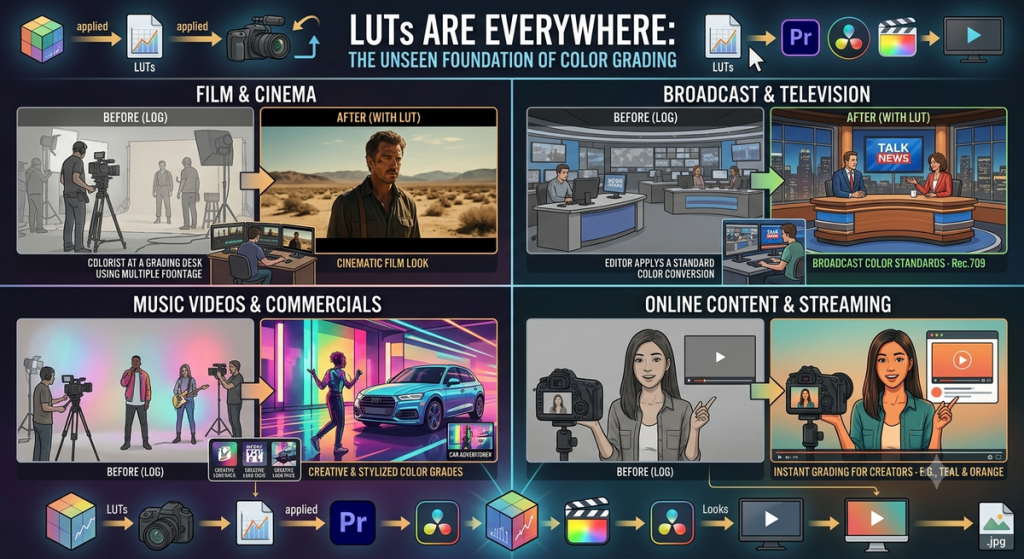
Think of Look-Up Tables (LUTs) as the digital shorthand of the visual world. While casual viewers rarely hear the term, LUTs are the quiet workhorses behind the polished aesthetics of everything from Hollywood blockbusters to your favorite creator’s YouTube videos.
At its core, a LUT is a mathematical blueprint that transforms color. It takes an input color value from a camera and maps it to a specific output value.
Here is why they are the undisputed foundation of modern color grading:
- The Log Lifeline: Modern cinema cameras shoot in “Log” profiles – flat, gray, and desaturated images designed to capture maximum dynamic range. Without a utility LUT to normalize this footage into standard color spaces (like Rec. 709), editors would be working in the dark.
- Universal Consistency: A single production might use five different camera brands. LUTs act as the great equalizer, neutralizing different sensor behaviors so the footage looks cohesive before the creative grading even begins.
- Speed and Efficiency: Color grading from scratch is time-consuming. LUTs provide an instant creative baseline. Whether a colorist wants a gritty sci-fi green or a warm, nostalgic film print look, a LUT establishes the mood in one click.
- The On-Set Bridge: Directors and clients need to see what a scene will look like while filming, not months later. Loading a “monitoring LUT” onto on-set displays allows the crew to visualize the final product in real-time, ensuring lighting and exposure are perfect.
From high-end TV dramas to photo – editing, LUTs bridge the gap between raw data and emotional storytelling. They aren’t a shortcut; they are the essential infrastructure that makes professional color grading possible, but REMEMBER – Make sure you have finalised the quality of your image before applying a LUT, they are not a means to overcome sloppy work !
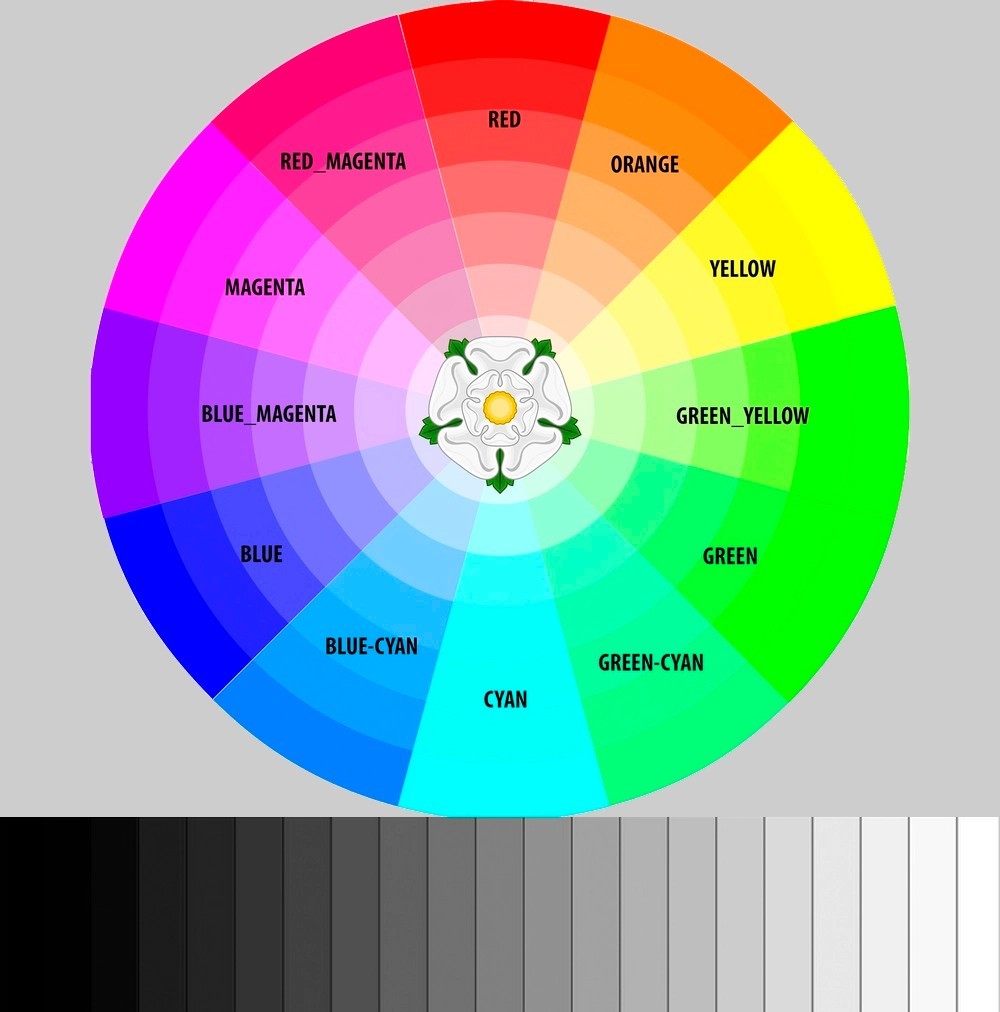
You can also download ‘A Test Card here’ to evaluate the effects of any specific LUT.
More LUTs will be added from time to time.