
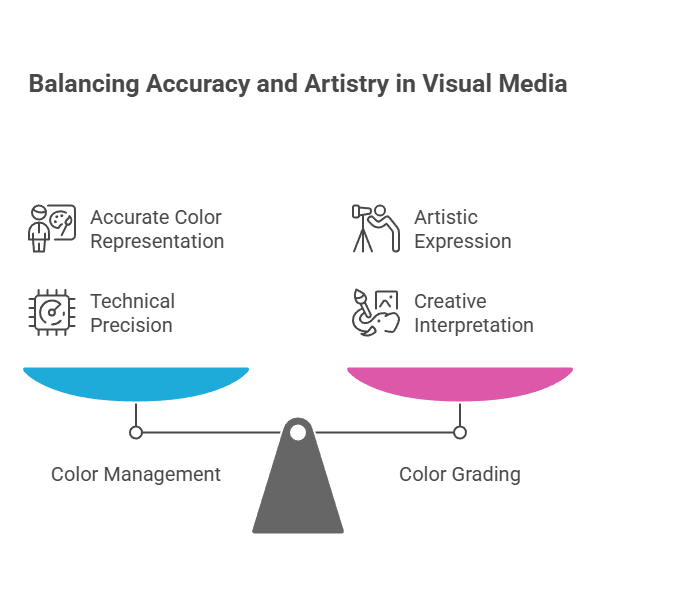
Colour management and colour grading are two essential processes in the realm of digital imaging and video production, each serving distinct purposes and employing different techniques. This page presents a high level view that aims to clarify the differences between these two concepts, highlighting their roles in achieving accurate colour representation and artistic expression in visual media.
Colour Management
Colour management refers to the systematic approach of controlling color in various devices and media to ensure consistency and accuracy across different platforms. This process involves the use of colour profiles that are mathematical representations of how colours are reproduced on different devices, such as cameras, monitors, and printers. The primary goal of color management is to maintain color fidelity throughout the workflow, from capture to display to print.
Key components of color management include:
- Color Profiles: These are standardized sets of data that define how colours should appear on specific devices. Common profiles include sRGB, Adobe RGB, and ProPhoto RGB.
- Calibration: This is the process of adjusting devices to ensure they reproduce colours accurately. Monitors, printers, and cameras often require calibration to maintain color consistency.
- Color Spaces: Different colour spaces define how colours are represented in digital formats. Understanding these spaces is crucial for effective color management.
Colour Grading
Colour grading, on the other hand, is a creative process that involves adjusting the colours and tones of a video or image to achieve a desired aesthetic or mood. This process is typically performed during post-production and allows filmmakers and photographers to enhance the visual storytelling of their work. Colour grading can involve a wide range of adjustments, including altering brightness, contrast, saturation, and color balance.
Key aspects of color grading include:
- Creative Expression: Colour grading is often used to evoke specific emotions or atmospheres in a scene. For example, a warm color palette may create a cozy feeling, while cooler tones can convey a sense of detachment or sadness.
- Tools and Software: Colour grading is usually performed using specialized software such as DaVinci Resolve, Adobe Premiere Pro, or Final Cut Pro, which offer advanced tools for manipulating color.
- Look Development: This involves creating a specific “look” or style for a project, which can be consistent across multiple scenes or shots.
Summary
Colour management is focused on ensuring accurate and consistent colour reproduction across various devices, while colour grading is a creative process aimed at enhancing the visual appeal of images and videos. Both of these processes are crucial in the fields of photography and film making, but they serve different purposes and require different skill sets.
Understanding the distinction between color management and colour grading is essential for anyone involved in visual media production.