
Mastering colour attributes
Mastering colour attributes is essential for precise digital grading. Whether developing custom 3D LUTs, tweaking RAW files, or assessing values against a neutral middle-gray.
Read moreIntended to capture the underlying basic principles associated with colour.
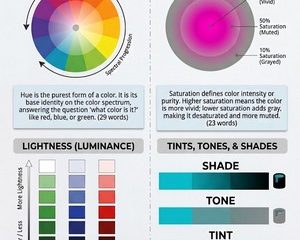
Mastering colour attributes is essential for precise digital grading. Whether developing custom 3D LUTs, tweaking RAW files, or assessing values against a neutral middle-gray.
Read more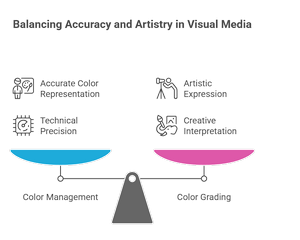
Colour management and colour grading are two essential processes in the realm of digital imaging and video production, each serving distinct purposes and employing different techniques.
Read more
The book is a practical, honest guide for photographers and digital artists who are ready to share their work, grow a real audience, and get seen, both online and in person. The Author has made this book available to everyone on a pay-what-you-want basis. Because we believe it should be[…]
Read more
Summary For many new photographers, the transition from “taking snapshots” to “pursuing photography” is often accompanied by the advice to shoot exclusively in RAW. The following report argues that beginners / novice photographers should prioritize high-quality JPEG files over the technically demanding RAW format and complex post-processing. Choosing high-quality JPEGs is a strategic decision that[…]
Read more
Tired of randomly cycling through blend modes, hoping for a happy accident? It’s time to stop guessing. These principles are the keys to unlocking the system, turning random chance into masterful intent. Download the Handbook here. The 5 Takeaways 1. Stop Memorizing, Start Understanding ! The key isn’t knowing every[…]
Read more
For the full story download the pdf here. The Science of Perception Understanding video color begins with the three pillars of human perception: Hue (the color family), Saturation (the intensity), and Luminance (the brightness). While we see intuitively, digital cameras and displays operate on the RGB model, often compressing color[…]
Read more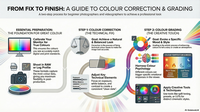
Introduction: The Quest for the Perfect “Look” We’ve all been there. You’re scrolling through your feed and you stop on a photo or a video clip that just feels different. The colors are rich, the mood is palpable, and the entire image has a polished, cinematic quality. You think, “I can do[…]
Read more
Stop spending hours trying to achieve that perfect look! Our FREE creative resource pack is designed to transform your video and photo workflow instantly. What’s inside this treasure trove? Whether you’re a seasoned pro or just starting out, these free assets are built to save you time and elevate your[…]
Read more
The HSL (Hue, Saturation, and Luminance) panel in Adobe Lightroom and many other editing applications, is one of the most powerful tools you have for fine-tuning the colors in your photos. While basic adjustments like contrast and vibrance apply globally, HSL lets you target and modify eight specific color ranges[…]
Read more
https://www.youtube.com/watch?v=QestybWv3Lk Summary In this tutorial, Jim Nix demonstrates a detailed landscape photo editing workflow using Luminar Neo, focusing particularly on colour grading techniques. Using a raw landscape photo from Madeira, the tutorial begins with an auto adjust to establish a baseline, followed by manual tweaks to contrast, highlights, shadows, temperature,[…]
Read more
Understanding the distinctions between “colour,” “hue,” “tint,” “shade,” and “tone” is crucial for anyone engaging seriously with photography. Although these terms are often used interchangeably in casual conversation, they possess precise meanings within colour theory. Colour serves as the broadest term, encompassing every hue, tint, tone, or shade perceivable by[…]
Read more
Color management and color grading are two distinct but interconnected processes in a post-production workflow. In simple terms, color management is the technical foundation that ensures color accuracy, while color grading is the creative process of styling the image. This document aims to clarify the differences between these two concepts,[…]
Read more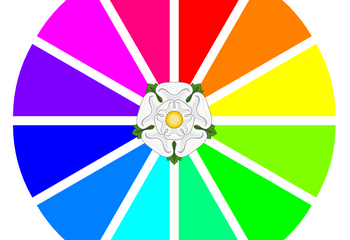
The RGB (Red, Green, Blue) color model is an additive color model, meaning that when you mix these colors of light, you get white. It’s the basis for how digital screens display color. Color Type Color Name Composition (RGB) Primary Colors Red Pure Red Green Pure Green Blue Pure Blue[…]
Read more